Home |
Mini UAC Series | MiniUAC-1210
MiniUAC-1210 Forward-Looking Sonar
Ultra-High-Frequency Short-range high-precision imaging
The MiniUAC-1210 sonar operates at dual frequencies of 1.8 MHz and 3 MHz, providing near-optical imaging resolution. It is specifically designed for short-range, high-precision imaging applications such as close-range target detection and inspection, and can serve as an alternative to optical imaging in turbid water environments.
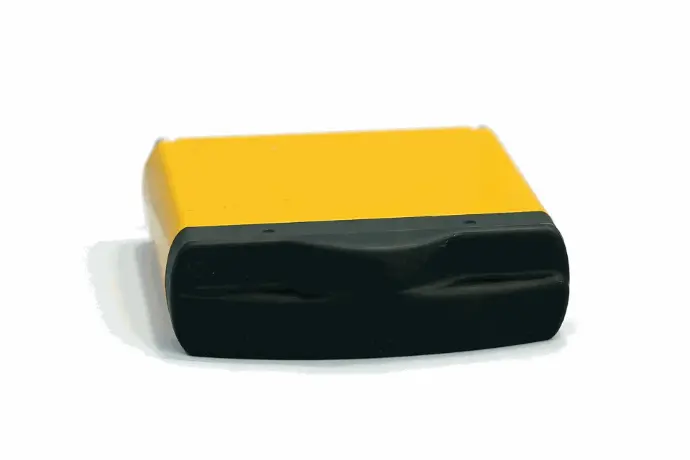
Overview
MiniUAC-1210 Imaging Sonar
Key Features:
- Ultra-High Frequency Operation (1.8 MHz / 3 MHz)
Delivers near-optical imaging quality for short-range underwater inspection.
- Short-Range High-Precision Imaging
Optimized for close-range target detection and detailed observation in confined environments.
- Near-Optical Resolution in Turbid Water
Effectively substitutes optical imaging where visibility is limited.
- High Angular Resolution & Multi-Beam Design
512 beams with narrow beamwidth enable fine structural detail recognition.
- Compact, Low-Power, Vehicle-Ready Design
Small form factor, low power consumption, and Ethernet interface for easy integration with ROVs, AUVs, and USVs.
Product Description
The MiniUAC-1210 ultra-high-frequency forward-looking sonar is currently the highest-frequency sonar in our product line. The ultra-high operating frequency delivers significantly enhanced resolution, achieving detection performance close to optical imaging. This product is dedicated to short-range, high-accuracy imaging tasks, including close-range target detection and inspection, and can partially replace optical imaging in turbid water conditions.
The currently marketed MiniUAC-1210B is the latest version in the MiniUAC-1210 series. Compared with the previous version, this upgrade improves the signal-to-noise ratio, increases the refresh rate, and extends the detection range. Other specifications and mechanical characteristics remain essentially unchanged.
The MiniUAC-1210B operates at two frequencies: 1.8 MHz and 3 MHz. Other frequencies can also be customized.
Specifications
Applications
- Ultra-High-Frequency Forward-Looking Sonar for Short-Range High-Precision Imaging
- Near-Optical Acoustic Imaging in Turbid and Low-Visibility Water
- High-Resolution Sonar for ROV / AUV Close-Range Inspection
- Confined-Space Underwater Structure and Target Inspection
- High-Accuracy Underwater Target Identification and Detail Recognition
Imaging Examples
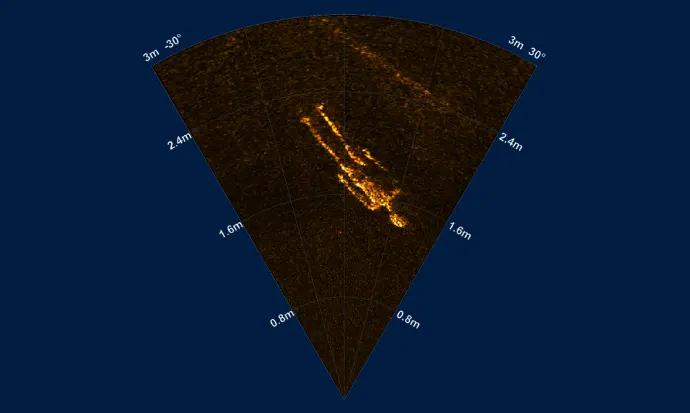
MiniUAC-1210B Acoustic Dummy Model
(1.8 MHz, 3m Range)
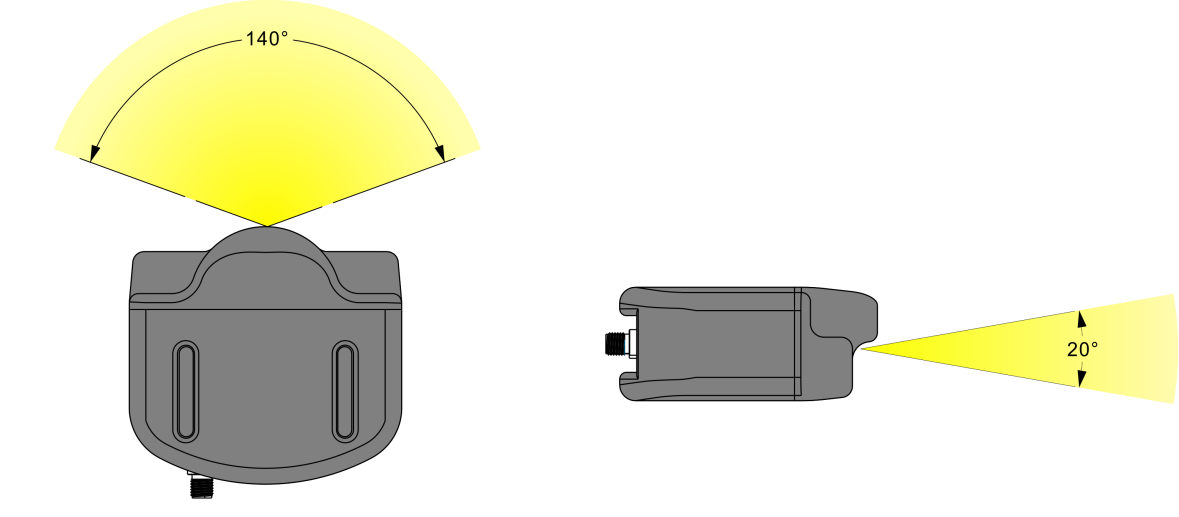
Detection Opening Angle Schematic
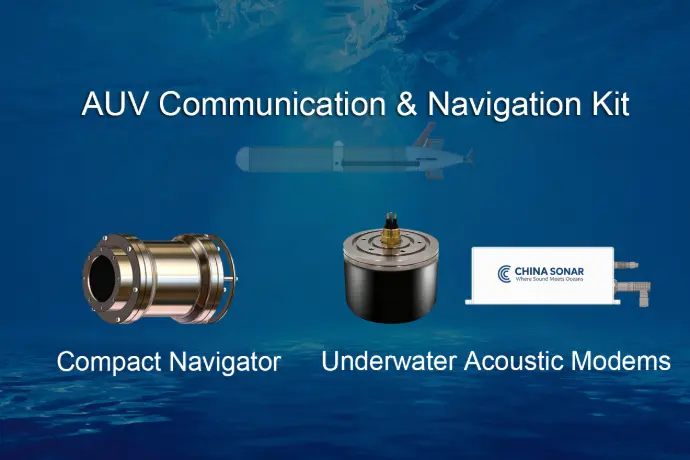
AUV Communication & Navigation Kit
Compact Navigator & Underwater Acoustic Modem
Designed for Autonomous Underwater Vehicles (AUVs), the AUV Communication & Navigation Kit delivers high-precision navigation and reliable underwater communication in a unified solution.
- NAVS-3000 Compact Navigator — Provides INS-based positioning, DVL velocity measurements, and depth data for precise real-time navigation.
-
UAC-08160X-OEM Underwater Acoustic Modem — Ensures stable, long-range underwater communication across multiple frequency bands.