LBL Positioning System
Seafloor Transponder Long Baseline (LBL) Positioning System
The seafloor transponder Long Baseline (LBL) positioning system achieves 2D horizontal positioning of seafloor transponders through multi-point measurements. Its positioning principle is similar to that of a conventional long baseline system. Meanwhile, a pressure sensor mounted on the transponder measures the transponder depth.
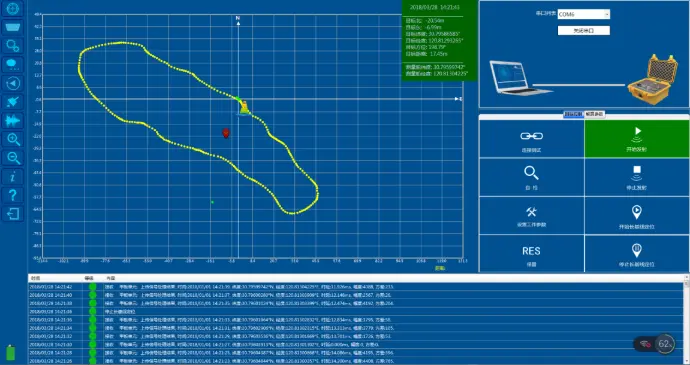
After deployment of the seafloor transponder, the survey vessel circles the transponder. Appropriate measurement points are selected during the circular trajectory. At each measurement point, the propagation time delay from the rangefinder transducer to the transponder is measured. The geodetic coordinates of the vessel‑mounted rangefinder transducer are determined by the shipboard GPS. Positioning solution is performed based on the spherical intersection principle. With an optimal combination of measurement points, the horizontal position of the transponder can be determined using only three measurement points.
System Functions
- Multi-target positioning and tracking
- Synchronous and transponder operating modes
- Data fusion capability to integrate differential GPS (DGPS) data for absolute beacon positioning
- Real-time display of target and vessel positions and trajectories
- System operating parameter configuration
- Command and control functions
- Self-test functions, including noise monitoring and equipment status detection
- Multiple series and models available, customizable design, and high-quality responsive service
System Composition
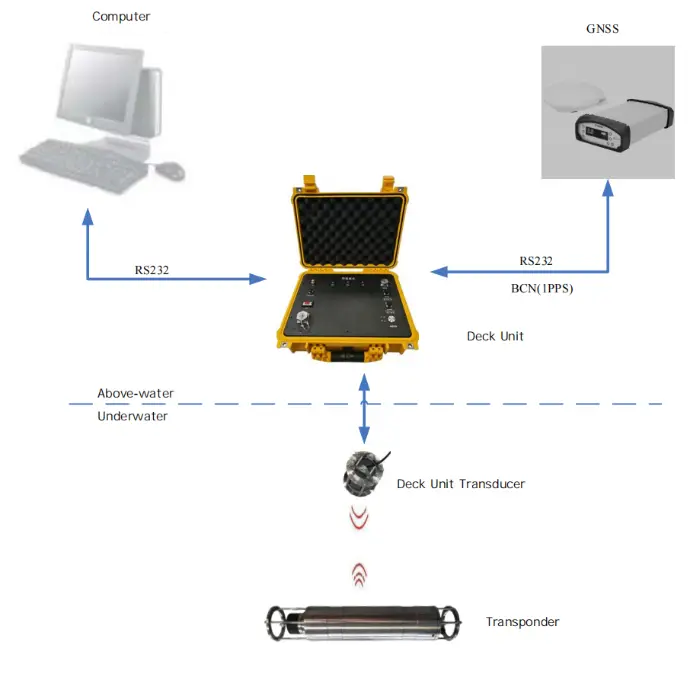
The seafloor transponder Long Baseline (LBL) acoustic positioning system mainly
consists of: Deck Unit, Deck Unit Transducer, Transponder, GPS, and a computer with
positioning software installed. The computer and GPS shall be provided by the client.
System Technical Specifications
Transponder
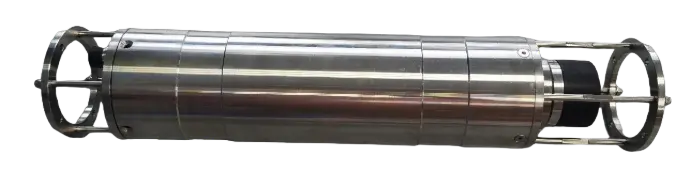
The transponder consists of a pressure-resistant hull, transducer, battery pack, and electronics module. Functions include: receiving commands, executing corresponding operations, and replying upon successful execution; entering low-power standby mode upon receiving a standby command; responding to interrogation signals for ranging when powered on; performing internal self-tests (battery voltage, depth) upon receiving a self-test command, and uploading status data via underwater acoustic telemetry.
Deck Unit
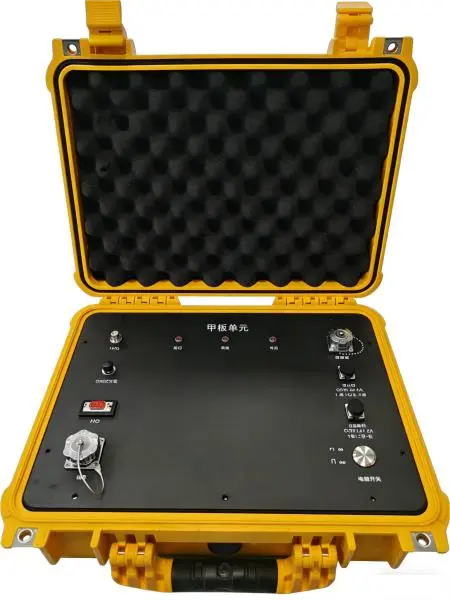
The deck unit is the surface control module for the underwater transponders in the positioning system. It is installed on the surface command vessel, used to transmit underwater acoustic remote control commands to seafloor transponders and receive reply acoustic signals, realizing underwater acoustic data transmission and command communication. The deck unit also transmits interrogation acoustic signals and receives reply pulses to implement underwater acoustic ranging.
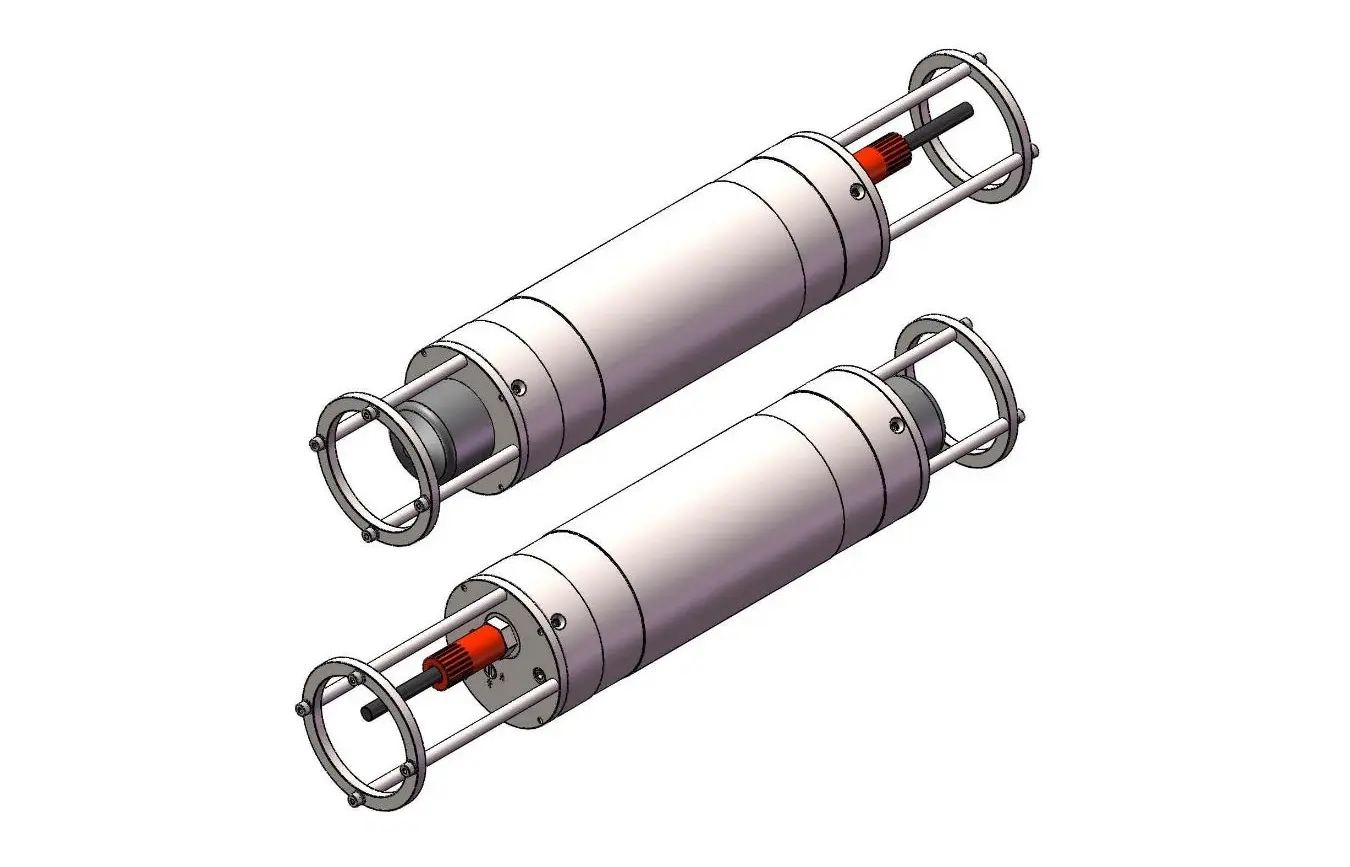
UAL-AT2030-L1500 Acoustic Transponder
1500 m Range Underwater Acoustic Transponder Beacon
The UAL-AT2030-L1500 transponder receives and responds to acoustic interrogation signals, enabling high-precision underwater ranging, status monitoring and acoustic remote control for subsea operations.
UAL-AT2030-L1500 transponders offer key advantages:
- Compact and highly integrated design
- Multi-function acoustic signal compatibility
- Long-term stable underwater standby performance