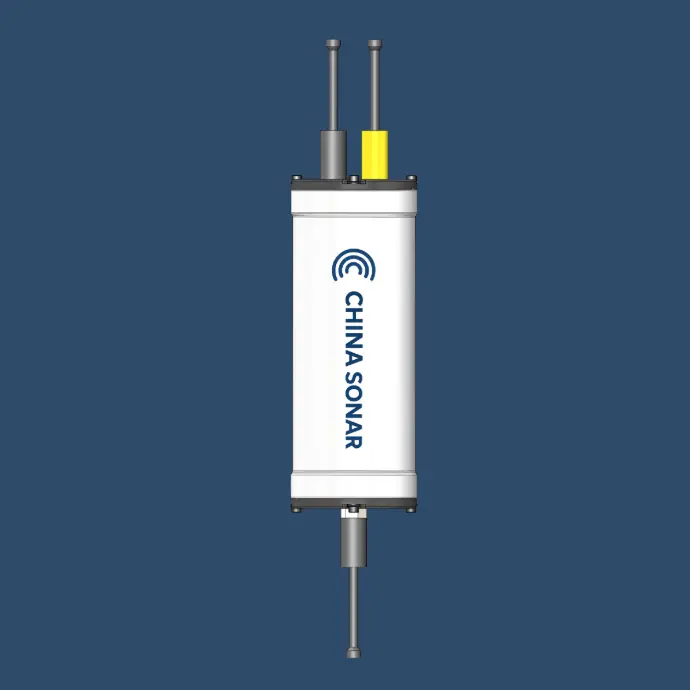
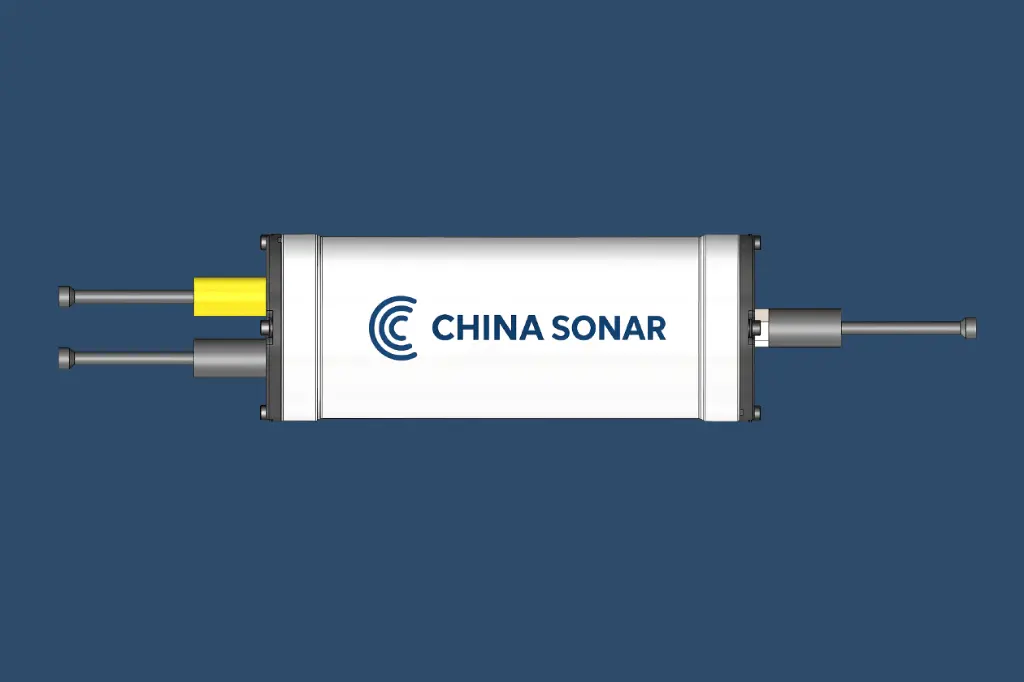
UAM-08160X-SE4T
10KM Long-range Underwater Acoustic Modems (UAMs),
Built-in duty module / Long-term observation / Externally powered / 6000m
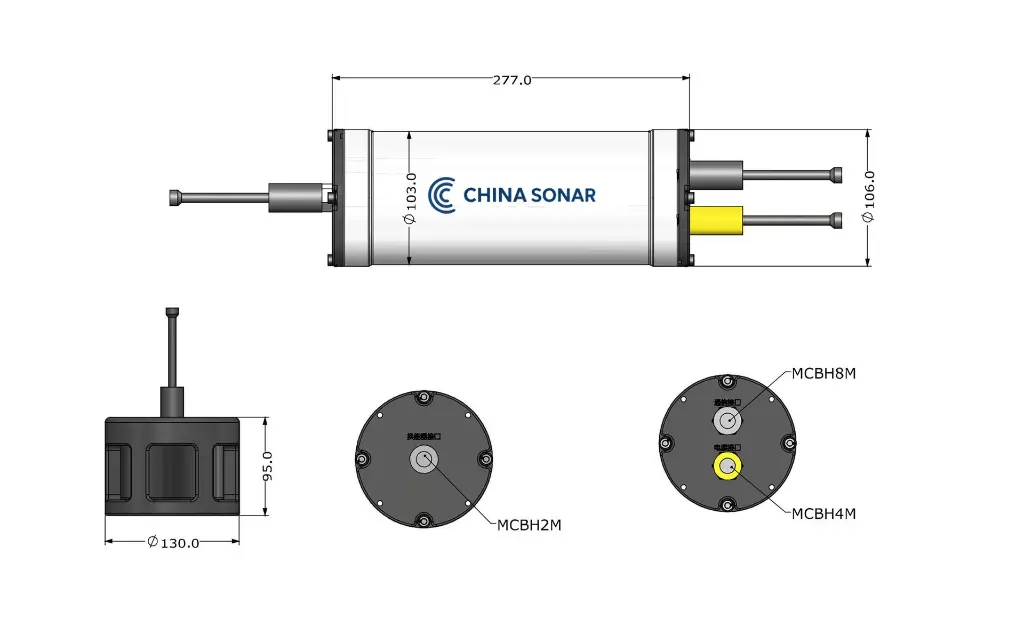
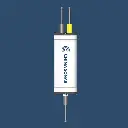
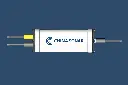
The UAM-08160X-SE4T is an underwater acoustic communication device designed for long-term observation platforms such as seabed bases and buoys. Featuring a modular TC4 titanium alloy structure, it offers lightweight durability, corrosion resistance, and flexible installation. Externally powered, the device allows users to design custom battery compartments to meet diverse mission requirements while supporting a low-power duty mode for energy efficiency.
| Communication Frequency Range: 8kHz-16kHz |
| Communication Distance: Up to 10km |
| Communication Rate: 100bps-4kbps |
| Bit Error Rate: 10⁻⁴ |
| Operating Modes: Transmit Mode/Receive Mode/Standby Mode |
| Communication Type: Half-Duplex |
| Communication Standard: Dual-Mode(MASS/SC-MPSK) |
| Maximum Working Depth: 6000m(with a design margin of 600m) |
| Standby Power Consumption: 20mW |
| Receive Mode Power Consumption: 3.6W |
| Transmit Mode Power Consumption: up to 120W(with adjustable power levels) |
| Power Supply Voltage: DC 24V |
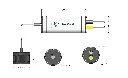
| Dimensions: Diameter 106mm × Height 227mm |
| Weight: 5kg(in air)/2.6kg(in water) |
Specifications
- AUV-Optimized Communication
Provides reliable acoustic links for AUVs, ensuring stable navigation, mission control, and data transmission. - Deep-Sea Capability
Operates at depths up to 6000 meters, suitable for extreme subsea operations. - Lightweight & Durable
Constructed from TC4 titanium alloy, combining strength with reduced weight, making it ideal for mobile underwater vehicles. - Flexible Power Options
Externally powered with customizable battery compartments. - Reliable Long-Range Communication
Achieves 10 km underwater communication with up to 4 kbps data rate (BER 10⁻⁴). - Protocol Support
Supports standard control protocols, with technical assistance for custom protocol development.
Applications
- AUV communication systems
- Seabed base communication
- Buoy data relay and ocean monitoring
- Long-term marine research and subsea data transmission
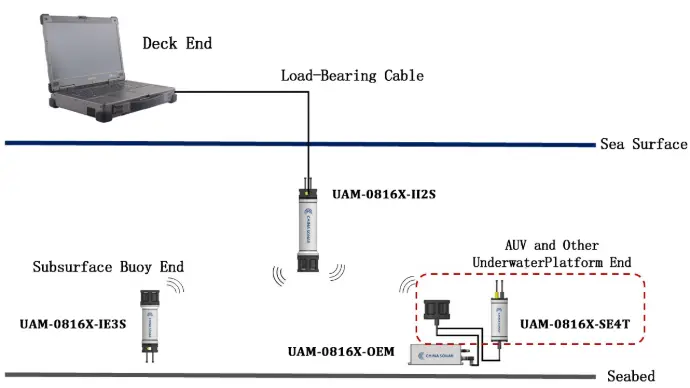
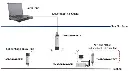
Application Diagram
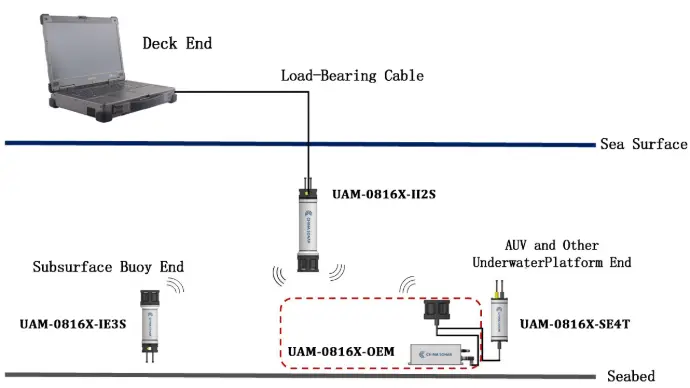
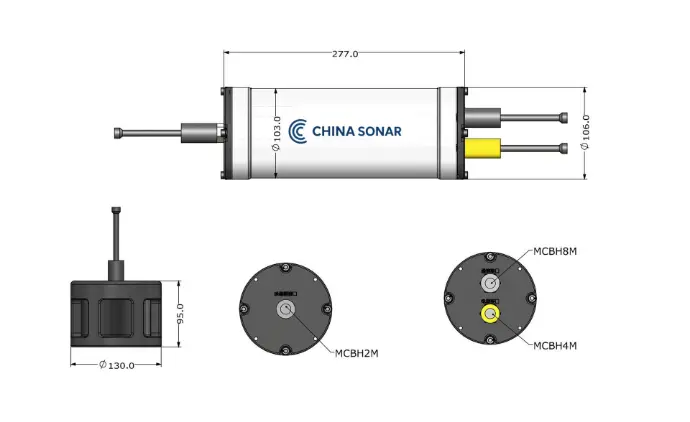
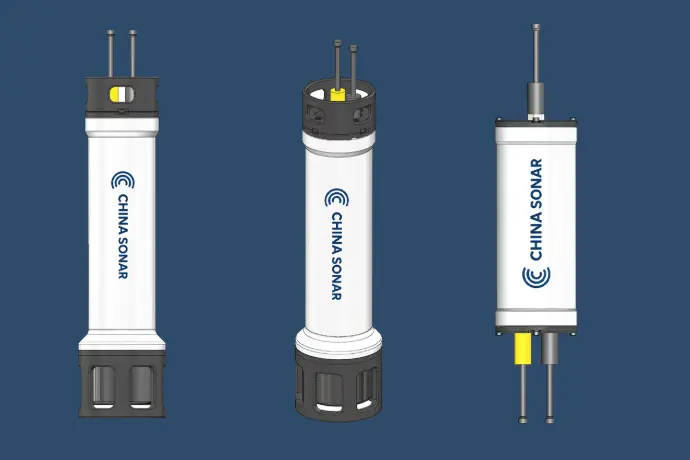
Explore the UAM-08160X Series
The UAM-08160X Series includes the portable II2S, the 4000 m-rated IE3S, the 6000 m deep-sea SE4T, and the highly integrable OEM system solution. Whether for shallow-water trials, coastal monitoring, or deep-sea engineering and system integration, the UAM-08160X Series delivers reliable performance for diverse underwater acoustic communication needs.
Related Products
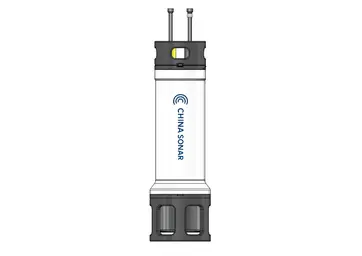
UAM-08160X-II2S
Frequency: 8kHz-16kHz
Communication Distance: 10km
Communication Rate:100-4kbps
Bit Error Rate:
10⁻⁴
Operating Range: 300m
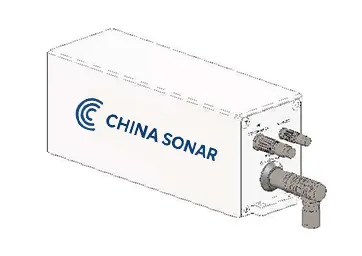
UAM-08160X-IE3S
Frequency: 8kHz-16kHz
Communication Distance: 10km
Communication Rate:100-4kbps
Bit Error Rate:
10⁻⁴
Operating Range: 4000m
UAM-08160X-OEM
Frequency: 8kHz-16kHz
Communication Distance: 10km
Communication Rate:100-4kbps
Bit Error Rate:
10⁻⁴
Operating Range: ≤6000m
How the UAM-08160X-SE4T Works
The UAM-08160X-SE4T is a deep-sea underwater acoustic communication system designed for reliable long-range data exchange in environments where radio frequency (RF) and optical signals cannot propagate. As part of the UAM-08160X series, this model is rated for 6000-meter operations, making it ideal for deep-ocean research, subsea monitoring, and offshore engineering applications.
Signal Conversion & Modulation
- Data from buoys, autonomous underwater vehicles (AUVs), remotely operated vehicles (ROVs), or seafloor sensor networks is first digitized.
- The underwater acoustic modem then applies advanced modulation schemes such as MASS and SC-MPSK, encoding digital information onto acoustic carriers in the 8–16 kHz frequency band, optimized for deep-sea underwater communication.
Transmission & Propagation in Deep Water
- Once modulated, acoustic wave transmission is emitted into seawater, traveling distances of up to 10 km under optimal conditions.
- Data rates range from 100 bps to 4 kbps, with a typical bit error rate around 10⁻⁴.
- The SE4T operates in half-duplex mode, alternating between transmit and receive, ensuring stable and energy-efficient communication in challenging deep-sea environments.
- Propagation is influenced by temperature, salinity, pressure, and multipath reflections from the seabed and surface. The system’s robust design and signal processing algorithms mitigate these effects for consistent performance.
Reception & Data Recovery
- Incoming underwater acoustic signals are captured by a hydrophone.
- The system then demodulates the signal and reconstructs the original digital data, enabling reliable transfer of telemetry, commands, and sensor information in subsea communication networks.
- Power management allows extended deployment, supporting autonomous operation for scientific missions and industrial monitoring.
Operational Parameters & Deployment
- Maximum working depth: 6000 meters, providing full coverage for deep-ocean exploration, subsea infrastructure, and offshore energy projects.
- Interfaces: Standard RS-232, RS-485, and RS-422 serial connections for easy integration with existing underwater acoustic systems.
- Power efficiency: Optimized energy consumption ensures long-term deployment in ocean observatories and seafloor monitoring stations.
Typical Application Scenarios
- Deep-ocean observatories and long-term environmental monitoring networks.
- Subsea cable and pipeline monitoring in offshore energy operations.
- AUV/ROV communication for control and data relay in deep-sea exploration.
- Buoy communication systems for oceanographic data collection.
- Offshore engineering projects including oil & gas, renewable energy platforms, and marine infrastructure.